Cooking Bacon in Air Fryer Simple Effective Practical
Introduction
Bacon made in an air fryer now shows up regularly in homes, and there is a clear explanation why. Stovetop frying tends to spray greasy spots on counters and cabinets, whereas baking usually demands more time along with extra dishes. Hot air moves rapidly inside these units, wrapping each strip, which leads to consistent results without the usual clutter traditional ways bring.
Still, hitting great outcomes every single time doesn’t just happen. One person might pull out bacon too brittle, another deals with patches that barely cook, thick smoke filling the kitchen, or strips twisting into tight rolls mid-cook. Heat moves differently in these machines. Bacon reacts in its own way. Knowing both sides helps avoid common letdowns. Inside here lies each detail worth knowing – how to ready the slices, when to stop the timer, fixing hiccups, methods pros lean on – all aimed at steady success, batch after batch.
why this topic matters
Bacon pops up at morning meals more than almost anything else, yet it leaves behind a trail nobody likes. Splashed fat coats the stove, some pieces burn while others stay soft, cleaning takes forever – these things make people skip frying it week after week.
Bacon cooked inside an air fryer basket tackles several common issues. Hot air moves around it, creating a crispy texture, yet the space stays closed so grease does not escape. Fat runs off as it heats up, which makes cleanup less messy compared to using a pan on the stove.
Most people overlook that each air fryer cooks differently due to unique shapes and heat flow. Since sizes differ, what works in one might fail in another. Because of this, matching your method to the machine makes a difference. Food comes out better when timing and placement line up with its design. Mistakes happen less once you notice how hot spots form during cycles. Consistency grows stronger the more you watch how things crisp near the fan versus corners.
How Air Fryers Cook Bacon
Inside the machine matters more than you might think when we get into how long things take or which methods work best.
Just because it’s called frying doesn’t mean oil is involved. Hot air spins fast inside, doing the cooking work. Crispy results come from motion, not grease. Browning happens when heat moves quickly around what’s inside.
Bacon loves this method since it’s packed with fat along with protein. When the fat melts away, moving air sweeps over each piece, pushing out dampness so edges turn crunchy. Moisture escapes fast thanks to steady airflow swirling nearby. Crispness shows up once water has left the outer layer behind.
Bacon ends up crisp, even when it isn’t swimming in fat. Grease drains away, leaving behind firmness you can feel. That shift happens because heat moves differently. Instead of stewing, the meat dries out just enough. A small gap makes space for air to circulate. Crispiness shows up where soggy strips once dominated. The outcome feels intentional, not accidental.
Best bacon types for air frying
Some bacon sizzles differently when it hits the pan.
Most of the time, thin bacon finishes fast, turning crunchy without much warning. Watch it carefully – just a few seconds too long might leave it far drier than expected.
Bacon with more heft needs extra time near the heat. Still, its forgiving nature wins favor among those cooking at home. Crisp ridges paired with soft cores – this contrast often comes easier with hefty cuts.
How fresh the bacon is changes how it turns out. When slices are newly made they brown at a steady pace, holding their shape from start to finish.
Want perfectly crispy bacon every time? Check out this simple air fryer bacon guide packed with practical tips and cooking times
How to get bacon ready for air frying
Bacon cooked in those countertop fryers saves time because it needs almost no setup. People rushing through mornings find that part especially handy.
Fresh bacon often lands straight from its wrapper into the fryer. Still, how you lay each piece changes everything.
Stacking slices kills even cooking. Air needs space to move – crowded layers block it. Uneven heat hits some parts too hard, leaves others cold. Spread them out instead. That way every piece gets its turn in the flow.
Bacon might need slicing down the middle before sliding into certain air fryer trays. Fitting it this way changes nothing about how it cooks. Instead of crowding, space opens up around each piece. Air moves better when there is room to flow through.The cooking results stay just as good, and may even turn out better.
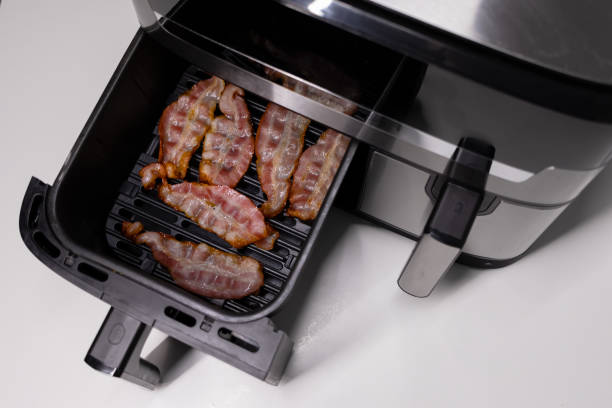
Fanned out flat, the strips cook just as you’d expect.
The Best Way to Cook Bacon Using an Air Fryer
Folks love air fryers because they’re quick, yet getting the time right makes all the difference. Even fast gadgets need a moment of patience.
Surprisingly soft warmth works better for cooking bacon than blasting it. Fat drips out slowly when treated gently, avoiding thick clouds of smoke altogether.
When bacon heats up, it shrinks a bit while browning begins. Fat drips below the rack, so less grease touches the pieces.
Texture comes down to what you like. A few folks pull the bacon out when it still gives a little under the tooth. Others let it sizzle longer, till it snaps between the fingers.
Bacon cooks quickly at the end, so it’s important to keep an eye on it during those final minutes.
Airflow Shifts What Happens
Bacon cooked in an air fryer changes texture because air moves around it without stopping. Heat circulation plays a big role in how crisp the final result becomes.
With traditional frying, the food comes into direct contact with the heat. From every angle at once, an air fryer sends warmth around instead.
Heat moves evenly around the meat, so every part looks similar when cooked. Unlike a pan, which heats unevenly, hot air wraps both sides at once.
Moisture slips away faster when air moves around, leaving things crunchy all on its own.
Busy Morning Real Life Example
Consider a household preparing breakfast on a weekday morning.
Grease tends to splatter everywhere after cooking, making cleanup a chore you did not expect. Juggling eggs, bacon, toast at once turns into chaos without warning.
Bacon sizzles inside the air fryer, leaving hands free for something else. While that happens, eggs get ready beside it, maybe some bread turns golden nearby. Fruit finds its way into a bowl at the same time. Lunch containers fill up without waiting for breakfast to finish.
For plenty of people, how easy it is to use ends up mattering just as much as what comes out of the machine.
One reason air fryer bacon is common in hectic homes? It just works better when time is short.
Understanding Texture Control
Baking might change how something feels more than anything else. How it crunches or sticks to the fork matters most sometimes. People try new ways just to shift that mouthfeel slightly. A method swap happens when the old way stops surprising. What you get on the tongue drives the search much of the time.
Bacon cooked in an air fryer might come out just a bit firm or fully brittle – how long it stays inside plus how thick each slice is makes the difference.
Bacon keeps changing even when it leaves the heat. Most overlook this shift, fixated only on timer settings. It firms up a bit more once out of the basket. Timing alone won’t capture that quiet finish.
That is why seasoned cooks occasionally take bacon out a moment before it hits the perfect crispness.
Waiting just a moment can make the outcome turn out smoother.
Errors People Make While Cooking Bacon in Air Fryers
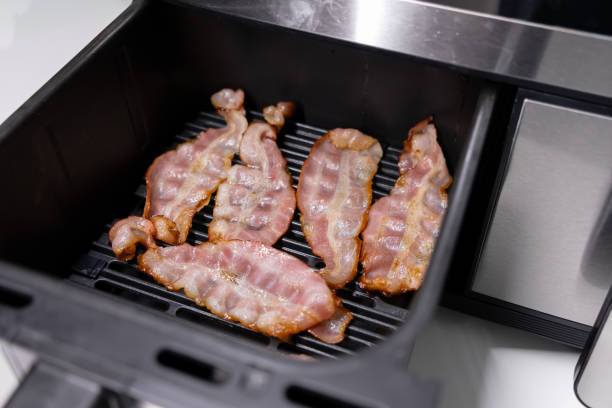
Overcrowding the Basket
Filling the basket with too many strips happens more than you’d think. What often goes wrong is overcrowding it right from the start. Most people drop in extra pieces without noticing the pile-up. Trouble begins when space runs out before heating even starts. It’s common – adding just a few more seems harmless. Yet each added strip reduces room for heat to move. That jammed setup slows everything down.
Too many items in one place block air movement, making heat work less efficiently. One chunk might finish sooner than its neighbor, leaving results uneven when touched or tasted.
Batches tend to make outcomes better. Still, doing things piece by piece can shift how it all turns out.
High Temperatures Used Too Much
Most folks think if the pan’s hotter, the bacon turns out superior.
Burning hot pans often push smoke into the air while spots on the meat turn dark too soon. The fat stays thick, never melting down like it should.
Outcomes tend to stay steady when settings aren’t extreme.
Ignoring Grease Accumulation
Fat pools beneath the basket while bacon fries above it.
Grease builds up when you cook several rounds back to back. Watch it closely if you want things to run smoothly. Smoke tends to rise when gunk piles on. Clearing the excess keeps operations steady. Performance stays strong with regular cleanup. Left alone, residue causes more mess than needed.
Walking Away Too Long
Cooking gets done fast inside these machines. Efficiency comes naturally when hot air moves quick around food.
Just when it seems done, bacon shifts fast toward brittle edges, especially in the last stretch of frying. A moment too long changes everything.
Checking things often keeps frustration away.
Ignoring Variations in Bacon Thickness
Thicker cuts take longer, while thinner ones finish faster.
Most folks treat all bacon alike when cooking, yet that one-size-fits-all clock rarely works out evenly across cuts.
Troubleshooting Common Problems
Why Your Bacon Isn’t Crispy?
Several factors may contribute.
Maybe the basket holds too much. Perhaps the heat runs too weak. Sometimes the clock just needs a tweak.
Better air movement usually fixes it.
Looking to make smarter kitchen choices and explore useful digital tools? Discover practical tech guides and updates at Parentshappy.
Smoke From Air Fryer Causes?
When heated too much, rendered bacon fat might start producing smoke.
Cooler heat settings help, while wiping away built-up oil between rounds makes a difference too. Sometimes it’s just that – less warmth, cleaner surfaces working together behind the scenes.
Uneven Bacon Cooking Explained?
Food cooks unevenly when slices touch each other or air cannot move freely around them.
Bacon laid out flat tends to cook more evenly. A single layer helps avoid uneven spots.
Why Bacon Curves When Cooked?
When bacon cooks, its proteins pull closer together. This causes it to shrink slowly.Heat changes the texture and structure of the food as it cooks. The meat firms up while losing moisture. Shrinking happens as water escapes. Each strip becomes denser through this process.
Curls appearing slightly? Totally common, won’t ruin the outcome. Quality stays intact.
Why the Bacon Comes Out Dry?
Too long on the heat often causes it.
Most times, cutting down cook time just a bit brings out better consistency. Not always expected, but shorter heat exposure can balance how food feels when eaten.
Better Air Fryer Bacon Simple Steps
Most chefs care more about steady results instead of quick fixes.
Bacon often needs less time than recipes suggest. Try peeking at it early – say, five minutes ahead – to stay on top of crispness. That small window makes a difference, keeping things just right instead of burnt. Watching closely means better results without guessing.
A short pause on a paper-covered dish follows cooking, one trick experts tend to use. Grease drains away during this moment, leaving crispness undisturbed. The brief wait settles the bite just right.
Midway through cooking, a few seasoned cooks shift the strips around when their machine heats unevenly. Sometimes the pieces cook faster on one side, so they flip them halfway. A couple of users turn the strips sideways if certain areas get too hot. When heat spreads oddly, swapping positions helps. If your unit runs hotter in spots, rotating the strips makes a difference. Some move the strips across the surface partway through. For those whose appliances have uneven warmth, repositioning works well.
Most specialists suggest wiping down the air fryer often. Since leftover oil builds up over time, it tends to slow things down while making more smoke during use. Grease that sticks around from old meals does not help efficiency at all.
Over time, tiny routines tend to shift things in quiet ways.
Air Fryer Bacon Texture Guide
Cooking Stage
Appearance
Texture
Early Stage
Pale with fat you can see
Soft
Mid Stage
Light browning begins
Flexible
Nearly Done
Deep golden color
Crisp edges
Fully Crisp
Rich brown appearance
Crunchy
Overcooked
Very dark surface
Dry and brittle
Looking at this chart makes it easier to see texture without just timing how long something cooks.
Improving Consistency Across Multiple Weeks
Weekends meant bacon cooked by a home chef in an air fryer – results never quite matched. Sometimes crisp, sometimes limp, each batch played its own tune.
Perfect ones showed up now and then, though crispiness hit the rest. Perfect ones showed up now and then, though crispiness hit the rest.
Looking back at how things were done, they adjusted two parts. The way it worked shifted slightly because of those updates.
Out of nowhere, things fit just right inside the basket again.
Later on, the bacon got a quick look while it cooked.
Weekend after weekend, things started clicking into place. Texture of the bacon turned steady, almost reliable. Cleaning up? Less hassle each time. Overcooking barely happened anymore.
Most times, small tweaks matter more than swapping tools or formulas. A shift here or there can outdo complete overhauls. What looks minor might actually change everything. Instead of starting fresh, adjusting what’s already there tends to work better. Rarely does a total rebuild beat fine-tuning the basics.
Everyday Cooking Made Simple
Bacon sizzles fast inside an air fryer when time feels tight.
Busy mornings get easier when steps take almost no effort. Cleanup slips away fast since pans stay mostly out of sight. Most families like how smooth it feels without scrubbing pots.
Every air fryer runs a little different depending on who made it or how it’s built. Try jotting down what works best so you can hit that sweet spot again later.
With practice, people usually learn what works best for cooking bacon in their own machine.
Air Fryer Bacon Versus Stovetop Oven
Even though this guide talks about making bacon in air fryers, knowing why people like it matters too. Not just speed but how crisp it turns out plays a part. What started as curiosity now shows up in many kitchens. Some say cleanup helps explain its rise. Others point to less grease splatter being key.
Fires crackle under cast iron, hands adjusting heat by feel alone. Focus stays sharp – every shift in temperature needs a response.
Baking at home usually means more food at once, yet it can need extra time warming up the oven plus dealing with mess later.
Baking without oil moves fast because setup takes little time. A closed space holds heat steady during the process. Washing up afterward feels lighter than usual.
What makes it stand out is how easily it fits into everyday meals. The way it works feels natural over time. One thing leads to another without hassle. It just shows up when needed, quietly. Meals come together because of that steady presence. Few things manage to stay useful like this does.
Frequently Asked Questions
How long does cooking bacon in air fryer appliances usually take?
How long it takes will shift based on how thick the bacon is, what kind of air fryer you’re using, also how crisp you want it. Usually, a batch cooks faster than it would in a regular oven.
Do I need oil when air frying bacon?
Bacon fries up just fine on its own – no extra grease needed. The meat brings plenty of richness along for the ride.
Should bacon be flipped during cooking?
Some air fryers handle even cooking without needing flipped food, yet a few people still shift pieces around just to be sure. Some slices get moved mid-cook, while others stay put – results vary by model and habit.
Why does bacon shrink in the air fryer?
When heat melts the fat while water escapes, bacon shrinks on its own. Totally expected behavior.
cooking multiple batches possible?
True. Some folks make multiple rounds back to back, yet keeping an eye on built-up oil after each round makes sense. Grease adds up fast if ignored.
How can I tell when bacon is fully cooked?
How it looks, its shade, its feel – those give the clearest clues. Once out of the air fryer, bacon gets a bit stiffer over moments.
Related Articles
These topics might be useful too
- How to Use an Air Fryer Efficiently
- Common Breakfast Cooking Mistakes
- Understanding Cooking Temperatures
- Easy Air Fryer Side Dishes
- Kitchen Cleanup Tips for Busy Households
Conclusion
Start mornings right by using an air fryer for bacon – fewer splatters, even crispiness. Watch how air moves around the basket, keep eyes on browning edges. Too many strips packed tight? Results go uneven. High settings burn before they render fat. Tweak times based on your machine’s rhythm. Preferences shift – one day chewy, next day shatter-crisp – adjust accordingly. Done well, it fits just how you like it.
Bacon cooks well in an air fryer, no matter if it is Tuesday morning or Saturday brunch. Timing matters – get it right, then doing it again feels natural. This method slips smoothly into most kitchen habits, once you’ve tried it twice. Heat does the work fast, leaving less mess behind than old ways ever did.